Strengthening the link between qualifications, higher education and labour market needs
Sectoral Qualifications Frameworks provide an important reference for defining the knowledge, skills, competencies and learning outcomes expected from graduates within specific professional fields.
Their development and national approval contribute to creating a clearer connection between higher education programmes, qualification requirements and the needs of the labour market, while supporting greater transparency and comparability of qualifications.
Within the RE-GRAD project, this work contributes directly to the broader objective of modernising undergraduate education in Armenia and Moldova and aligning study programmes with contemporary economic, environmental and societal priorities.
The approved frameworks provide an important basis for:
modernising and reviewing Bachelor’s degree programmes in the corresponding fields;
defining clearer learning outcomes and graduate competencies;
improving the alignment of educational programmes with sectoral and labour market needs;
supporting the development of transparent and comparable qualifications;
strengthening the link between universities, employers and other relevant stakeholders;
supporting the alignment of higher education with approaches promoted within the European Higher Education Area.
From project development to national-level recognition
The approval of the four Sectoral Qualifications Frameworks is particularly important because it demonstrates the transition from project-level development to formal national recognition.
Rather than remaining only technical or academic project outputs, the frameworks now provide nationally recognised references that can support the further development and modernisation of higher education programmes in Armenia.
This achievement also illustrates the value of cooperation among higher education institutions, national authorities, academic experts and relevant stakeholders in developing solutions that respond to both educational priorities and changing professional requirements.
Through this process, RE-GRAD contributes not only to the revision of individual educational programmes, but also to the creation of conditions for long-term and systemic improvements in higher education.
A broader regional impact of RE-GRAD
The national approval of the Sectoral Qualifications Frameworks in Armenia complements other important structural achievements generated through RE-GRAD.
In the Republic of Moldova, the Concept for the Integration of Sustainable Development Goals into Higher Education Programmes developed within the project was officially approved by the Ministry of Education and Research through Ministerial Order No. 197 of 30 January 2026.
Together, these developments demonstrate the broader regional impact of the RE-GRAD project: from project activities to concrete deliverables to national-level recognition and structural change.
While Armenia has advanced the development and formal recognition of sector-specific qualification frameworks, Moldova has established a national framework supporting the integration of sustainability and the Sustainable Development Goals into higher education.
These complementary achievements contribute to the common RE-GRAD objective of building a modern, green, inclusive and future-oriented higher education system in Armenia and Moldova, aligned with European approaches and responsive to societal and labour market needs.
The adoption of the four Sectoral Qualifications Frameworks represents an important step towards ensuring that the results developed through RE-GRAD continue to generate impact beyond the duration of the project, supporting curriculum modernisation, quality enhancement and sustainable institutional development.
Congratulations to all RE-GRAD partners, academic experts, national authorities and stakeholders whose contribution made this important achievement possible.
Through results such as these, Erasmus+ cooperation demonstrates its capacity to move beyond individual project activities and contribute to lasting structural change in higher education systems.
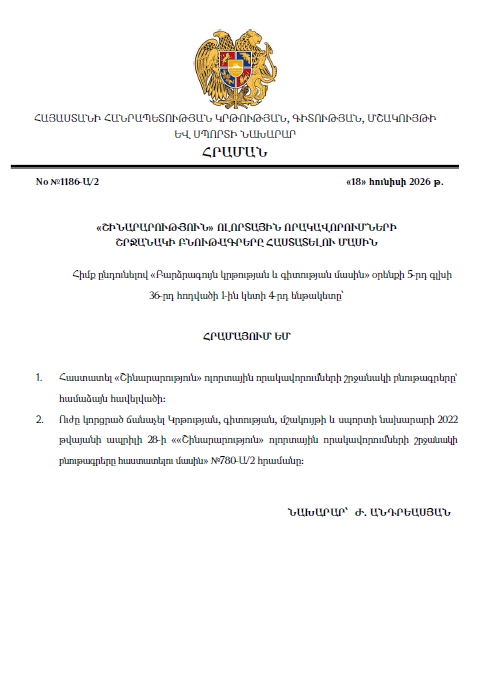
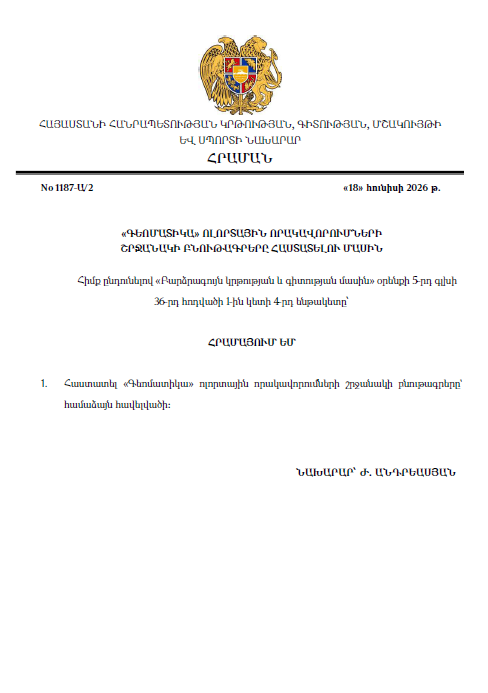
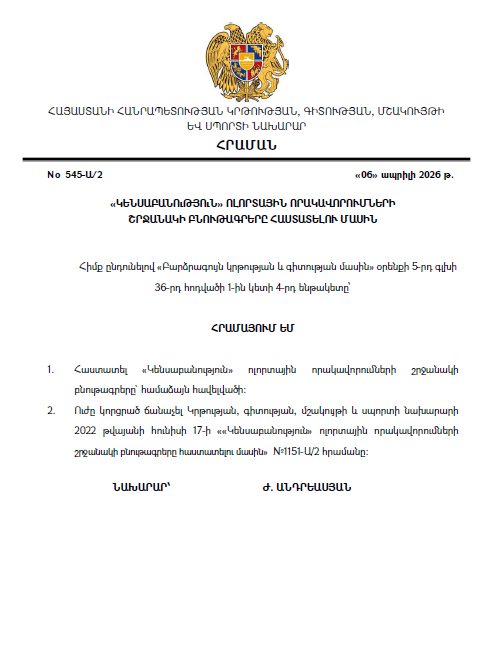
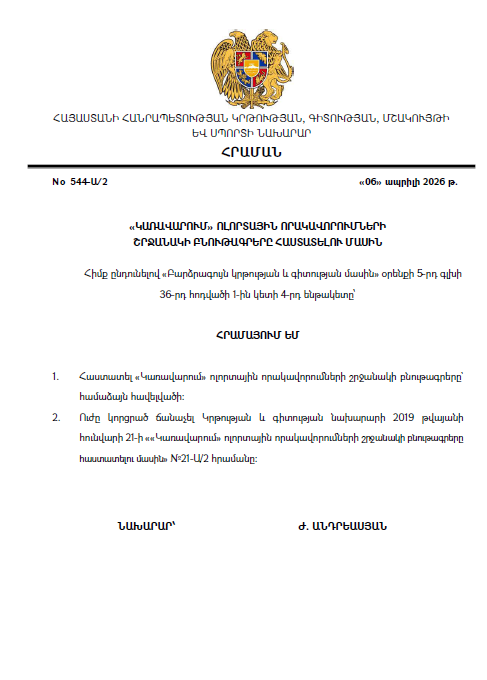
Approved Sectoral Qualifications Frameworks in Armenia: