THE INTERIM RESULTS OF THE RE-GRAD PROJECT IN BRAȘOV

From March 24–27, 2026, the international academic community gathered under the auspices of the RE-GRAD project – an ambitious initiative aimed at modernizing higher education under the strategic coordination of the Technical University of Moldova (UTM). In this context, the UTM implementation team participated in the international workshop hosted by Transilvania University of Brașov, a key event for analyzing progress made in reforming study programs across the region. This initiative, focused on exchanging best practices and analyzing the interim results of the pilot phase, targeted the direct integration of the principles of the European Green Deal, digitalization, and the Sustainable Development Goals (SDGs) into the university curricula. The meeting facilitated a constructive dialogue among the 12 partners from the Republic of Moldova, Romania, Armenia, France, and Italy, providing the necessary framework to assess how the 8 revised study programs meet the new standards of quality and European relevance. The official opening, delivered by Prof. Dr. Eng. Simona Lache (UNITBV), emphasized that the relevance of current studies critically depends on alignment with the standards of the European Higher Education Area. In addition, the RE-GRAD project coordinator, Assoc. Prof. Nina Puțuntean, highlighted the current status of implementation, marking the transition toward an educational model based on applied competencies and sustainability. The UTM delegation benefited from the expertise of a multidisciplinary team, including Dr. Cristina Diaconu (project manager), Associate Professor Dr. Vladislav Reșitca (First Vice-Rector), as well as deans and faculty members: Associate Professor Dr. Iurie Subotin, Associate Professor Dr. Marin Guțu, Associate Professor Dr. Mihail Balan, Associate Professor Dr. Ana Cozari, and Ms. Oxana Cibotaru, senior specialist at the International Cooperation Office. The meeting agenda placed particular emphasis on the results achieved by partners from the Republic of Moldova and Armenia. UTM representatives demonstrated – through the contributions of Mr. Marin Guțu and Mr. Iurie Subotin – demonstrated how the “Mechanical Engineering” and “Wine and Fermented Products Technology” programs have been transformed through the integration of green competencies. Similarly, colleagues from the “Bogdan Petriceicu Hașdeu” State University in Cahul and Armenian partners from YSU and NUACA presented curricula adaptations in fields such as public administration, biology, and geodesy, all oriented toward a sustainable economy. Beyond academic aspects, discussions focused on progress assessment, policy dialogue, and the structural impact that RE-GRAD is generating at the national level. The presence of Ms. Doina Usaci, representing the Ministry of Education and Research of the Republic of Moldova, confirmed the project’s importance as a public policy tool. A major outcome highlighted was the approval of the Concept on the Integration of the SDGs into Higher Education Curricula (Order No. 197/2026), a document which, alongside the update of the National Framework Plan, mandates the inclusion of environmental protection courses in the training of young professionals. The conclusions of the meeting and the future prospects outlined on the final day of the gathering reaffirmed the project’s sustainability. In addition to study visits to innovative facilities such as the “Solar House,” the consortium laid the groundwork for long-term collaborations by signing memorandums of understanding (MoUs). Under the coordination of Dr. Arayik Navoyan and with the support of the France-Moldova Chamber of Commerce and Industry, represented by Emmanuel Skoulios, the next step is to validate the programs through consultations with the socio-economic sector, thereby ensuring that the curricula modernization initiated by RE-GRAD will produce specialists prepared for tomorrow’s labor market.
A Major Step Forward for Education for Sustainable Development in Moldova: From Project Deliverable to National Policy – The Impact of RE-GRAD

Technical University of Moldova, as a CBHE project coordinator, is proud to announce a significant milestone demonstrating the tangible impact international cooperation projects can have on national education systems. The Ministry of Education and Research of the Republic of Moldova has formally approved the Concept for the Integration of Sustainable Development Goals (SDGs) into Higher Education Programmes (Ministerial Order No. 197 of 30 January 2026), marking an important step in modernising higher education and aligning it with sustainability priorities. Developed within the Erasmus+ Capacity Building project RE-GRAD (Reforming Undergraduate Education for Green and Sustainable Development in Armenia and Moldova, ERASMUS-EDU-2023-CBHE-STRAND-3), the Concept establishes a national strategic framework enabling universities to embed sustainability competencies across undergraduate educational offers. Its adoption represents a concrete example of how international academic cooperation can translate into structural policy change and support the transition towards more future-oriented higher education systems. The framework provides guidance for curriculum innovation, interdisciplinary learning, and strengthened engagement with labour market stakeholders, contributing to improved graduate preparedness for green and digital transitions. Despite growing policy attention to sustainable development in education the systematic integration of Education for Sustainable Development (ESD) in Moldovan higher education has remained fragmented, often dependent on individual institutional initiatives and externally funded projects. In this context, the Concept contributes to addressing an acknowledged coordination gap by offering a national reference framework to guide universities in curriculum modernisation processes.The approval of the Concept by the Ministry of Education and Research of Moldova reflects collaborative input from Moldovan universities, European higher education partners, and industry representatives, demonstrating the value of multi-stakeholder approaches in designing policy-relevant frameworks. Aligned with UNESCO’s “ESD for 2030” roadmap, the Concept enables: Transition from traditional curricula to future-oriented, green study programmes; Integration of SDGs into Bachelor’s and Master’s degree programmes; Implementation of priorities from Moldova’s National Education Strategy 2030; Strengthening of sustainability competencies among graduates. The Concept also introduces practical measures for greening higher education, including: Dedicated sustainability courses across disciplines; Interdisciplinary and transdisciplinary learning approaches; Student involvement in sustainability projects and research; Sustainable campus operations and infrastructure; Strengthened partnerships with industry, NGOs, and public institutions. Beyond the project deliverables, the Ministry further acted on insights identified during RE-GRAD implementation, addressing critical national needs: Modernization of the Framework Plan for Higher Education, approved by Ministerial Order No. 510 of 07 April 2025, through the inclusion, in mandatory Component G, of courses on ecology and environmental protection in university curricula and specialized modules. This demonstrates the Concept’s added value beyond the original project scope, turning international collaboration into a concrete national policy instrument. Parallel structural reform achievements within the project, such as the development of Sectoral Qualification Frameworks in Armenia, further illustrate the regional impact of Erasmus+ cooperation in supporting systemic modernisation aligned with European Higher Education Area standards.Together, these outputs contribute to a future-oriented, green, and sustainable higher education system in both countries. Congratulations to all RE-GRAD partners and contributors whose dedication made this milestone possible. With initiatives like this, Moldova takes a decisive step toward preparing students for a sustainable future, embedding environmental, social, and economic responsibility into higher education. Further information: Ministry of Education and Research – legislative acts Ministerial Order No. 197/30.01.2026 – Concept of SDG Integration
RE-GRAD – A Key Driver in Transforming Education in the Republic of Moldova at the Event “Innovation in Education: ERASMUS+ and STEAM Without Borders”
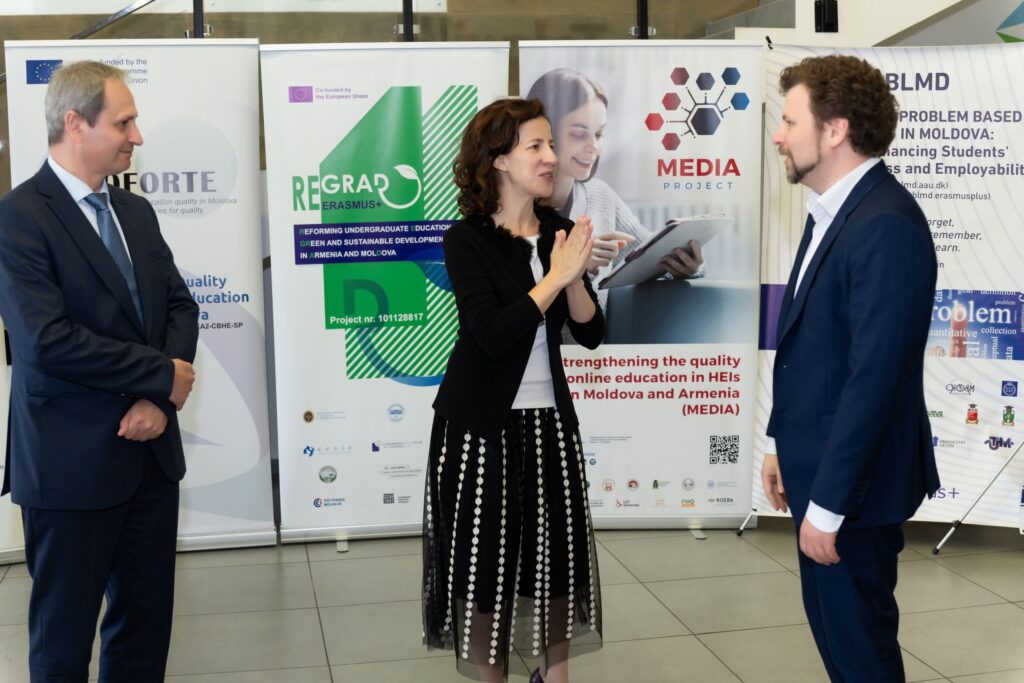
RE-GRAD project stood out as one of the eight structural ERASMUS+ projects showcased at the national event “Innovation in Education: ERASMUS+ and STEAM Without Borders in Moldova,” held at the Technical University of Moldova (TUM). Organized under the umbrella of the “Youth for Europe” initiative, the event brought together over 250 pupils, students, educators, and representatives from key educational institutions and public authorities for a high-level dialogue focused on the future of education, innovation, and international cooperation. As part of the exhibition of best practices and educational initiatives hosted at the TEKWILL Center in the Râșcani campus – a symbolic space for Moldova’s technical and scientific innovation – RE-GRAD project was highlighted as a tangible example of higher education modernization. The spotlight was on its contribution to promoting a culture of quality in education through sustainable competence-based approaches, digitalization, European cooperation, and the core principles of the Green Deal. The program continued with an interactive session, where representatives of ERASMUS+ projects, including RE-GRAD, engaged in dialogue with prominent figures such as H.E. Roxana Mânzatu – Executive Vice-President of the European Commission, Dan Perciun – Minister of Education and Research, Prof. Dr. habil. Viorel Bostan – Rector of TUM, alongside other key stakeholders involved in Moldova’s educational reforms. Through its presence, RE-GRAD reaffirmed its essential role in advancing educational reform and internationalization in Moldova. Moreover, it showcased the tangible impact of the ERASMUS+ programme in supporting modern, inclusive, and forward-looking education systems.
INNOVATIVE TEACHING FOR A SUSTAINABLE AND DIGITAL FUTURE: TRAINING SESSION WITHIN THE RE-GRAD PROJECT

From June 2 to 6, 2025, the Erasmus+ KA2 project “Reforming Undergraduate Education for GReen and Sustainable Development in Armenia and MolDova” – RE-GRAD (#101128817) hosted an international training session titled “Innovative Teaching for a Sustainable and Digital Future.” The event was held online and brought together experts and academic staff from partner institutions in Armenia, the Republic of Moldova, France, Italy, and Romania. Organized under the auspices of the Technical University of Moldova, the project coordinator, the event addressed key topics for reforming higher education towards sustainability and digitalization, contributing to the integration of the European Green Deal principles and the Sustainable Development Goals (SDGs) into educational systems. The official opening featured speeches from Ms. Daniela POJAR, Vice-Rector of UTM, Assoc. Prof. Dr. Nina PUȚUNTEAN, project coordinator, and Dr. Sergiu CORNEA, Rector of the “Bogdan Petriceicu Hasdeu” State University of Cahul, who emphasized the importance of international collaboration for building a green and sustainable educational future. The thematic training sessions provided participants with valuable professional development opportunities: ✅ June 2 – Sustainability-Oriented Education, delivered by Prof. Codruța JALIU and Assoc. Prof. Daniela CIOBANU, Transilvania University of Brașov.✅ June 3 – Learning Beyond the Classroom: Best Practices from the University of Strasbourg on Business Simulations, Creative Autumn Schools, and Challenge-Based Learning.✅ June 4 – Effective Integration of Artificial Intelligence in Education, with examples from CESIE (Italy).✅ June 5 – Digital Tools for Hybrid and Distance Learning, presented by experts from the University of Sannio, Italy.✅ June 6 – Future Trends and Educational Dialogue with representatives from the economic sector, including Efes Vitanta Moldova and CCIFM, focusing on employers’ ESG expectations and the role of middle management in integrating SDGs within companies. Each session concluded with interactive reflections, questions, and discussions that encouraged the exchange of good practices and strengthened the international academic community committed to education for sustainability. The event took place online; the full agenda can be accessed here.
Internationalization Day 2025 at UTM – Education Without Borders
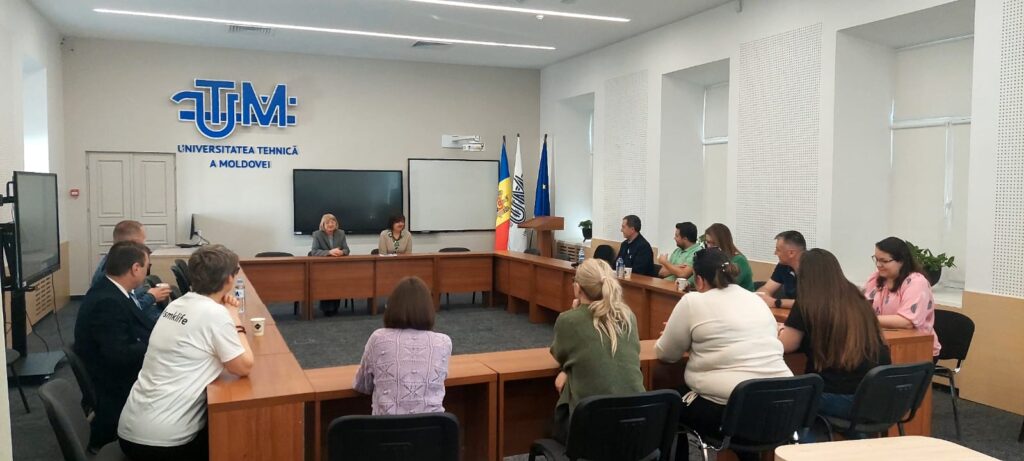
On May 16, 2025, the Technical University of Moldova (UTM) hosted a new edition of Internationalization Day, bringing together students, academic staff, and international partners in an event dedicated to global academic collaboration. Opened by Mrs. Daniela Pojar, Vice-Rector for Finance and International Relations, the event began with an exhibition in the Museum Park on the Râșcani campus, showcasing UTM’s international initiatives and projects, including the RE-GRAD project. The program included:🔹 An interactive student workshop organized by Dyninno Group🔹 Presentations of international strategies and projects by UTM representatives and the National Erasmus+ Office🔹 A presentation of the RE-GRAD project – a model of best practices in sustainable education and internationalization🔹 A special session dedicated to partner universities from Lithuania, Czech Republic, Romania, Poland, and Turkey The event concluded with a networking session. The involvement of the RE-GRAD project highlighted UTM’s commitment to high-quality European education that is inclusive and responsive to current global challenges.
INTERNATIONAL COLLABORATION FOR SUSTAINABLE DEVELOPMENT: RE-GRAD STUDY VISIT TO THE UNIVERSITY OF SANNIO, ITALY
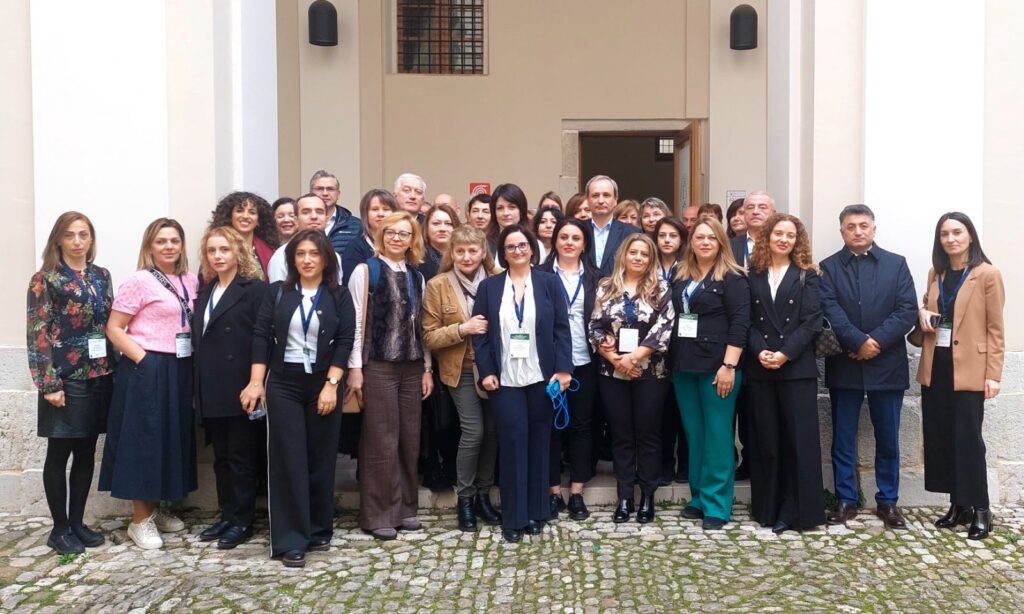
From December 3 to 6, 2024, the University of Sannio, Benevento, Italy hosted an important study visit in the framework of the Erasmus+ KA2 project “RE-GRAD” (“Reforming University Education for Green and Sustainable Development in Armenia and the Republic of Moldova”) – an essential step in promoting sustainable education in higher education in these two countries. Coordinated by the Technical University of Moldova, the project focuses on the integration of the European Green Deal and the Sustainable Development Goals (SDGs) in higher education, stimulating the implementation of sustainable educational practices. The visit brought together consortium representatives from 12 partner institutions from 5 countries: Italy, Republic of Moldova, Armenia, France and Romania. The event started with welcome speeches by Prof. Gerardo CANFORA, Rector of the University of Sannio, and Prof.., dr. hab. Viorel BOSTAN, Rector of the Technical University of Moldova, who expressed their enthusiasm for the mission of the project, emphasizing the importance of international collaboration and the relevance of integrating the principles of sustainability. The event was also attended by Prof. Nicola FONTANA, Dean of the Department of Engineering, Prof. Pasquale VITO, Dean of the Department of Science and Technology, and Prof. Gaetano NATULLO, Dean of the Department of Law, Economics, Management and Quantitative Methods at the University of Sannio, who emphasized the commitment of the institution to sustainable education and the importance of interdisciplinary collaboration. Prof. Dr. Nina PUTUNTEAN, Head of International Relations, UTM, RE-GRAD project coordinator, and Cristina DIACONU, project manager, presented a detailed update on the project’s progress, highlighting the alignment of the educational strategy with the European Green Deal and the Sustainable Development Goals. This presentation reinforced the collective vision of the consortium and motivated participants for future sessions. On the first day, prof. Eulalia BALESTRIERI, RE-GRAD coordinator at the University of Sannio, led a session dedicated to digitization-oriented teaching and learning, together with prof. Maria MORENO, Rector’s Delegate for Didactics, prof. Concetta NAZZARO, President of the Council of the Degree Course in Digital Administration Studies, prof. Carmela GALDI, President of the Internationalization Commission of the Council of the Master’s Degree Course in Electronic Engineering for Automation and Sensing, and prof. Biagio SIMONETTI, Rector’s Delegate for Mobility and International Relations, who discussed the use of digital technologies in higher education. The second day was dedicated to innovative teaching and the implementation of sustainable educational practices. Marika D’ANGELO and Alessia VALENTI from CESIE, Italy, gave a presentation on rethinking teaching using the ADDIE model and the 12 principles of multimedia learning. Prof. Amelia LECCE, University of Sannio, addressed the use of digital tools for special education needs, and Prof. Maria TORTORELLA and Nazzareno D’AGOSTINO, University of Sannio, discussed the implementation of artificial intelligence in education. Prof. Michelina MONACO, University of Sannio, discussed the role of theory in teaching applied mechanics. Prof. Rosa Francesca de MASI, University of Sannio, presented the transition from near-zero energy buildings (nZEB) to hydrogen zero energy buildings (hZEB), the sessions ending with a guided tour of hZEB installations. Day three included sessions on scalable grids for practical distance learning, presented by Eng. Enrico PICARIELLO, University of Sannio. Prof. Sergio RAPUANO and Prof. Ioan TUDOSA, University of Sannio, discussed experimental teaching during the coronavirus pandemic, and Prof. Antonino IANNUZZO and Prof. Francesco PICARIELLO, University of Sannio, explored digital technology for monitoring masonry structures. Also, PhD Alberto MICCO, director of the 3D Prototyping Laboratory, talked about accessibility through 3D prototyping. Digital teaching and learning outcomes from partner institutions were also presented, including contributions from Professors Richard STEMPLOWSKI and Sophie BOLLINGER, University of Strasbourg, and Codruța JALIU, Transilvania University of Brasov, Romania. At the end of the day, there was a working meeting with Irina VANYAN from the National University of Architecture and Construction of Armenia, Karen GHAZARYAN, Dean of the Faculty of Biology, Yerevan State University, and Vahagn AGLYAN, Head of the Department of Public Administration, Yerevan State University, who discussed the recommendations for the framework of “Sectoral Qualifications in Construction” in Armenia. Elena ȚURCAN, Ministry of Education and Research of the Republic of Moldova, presented the outline of the Concept of Education for Sustainable Development Education (CESD). The last day of the visit featured a workshop on metrology for sustainability, with presentations by Eng. Imran AHMED on the morphometric measurement of fish blood cells as biomarkers for water pollution, Prof. Roberta IMPERATORE on agri-food by-products for a circular economy, Prof. Concetta NAZZARO on key performance indicators for social sustainability in the Italian agri-food sector, and Prof. Leopoldo Angrisani on artificial intelligence-based measurements. Topics such as energy harvesting for sustainable remote sensing, social sustainability in inland areas and sustainable waste management were also presented. This study visit was instrumental in promoting sustainability in higher education, fostering collaboration and exchange of best practices between participants and reinforcing the RE-GRAD project objectives.
Study Visit Announcement: Erasmus+ KA2 Project RE-GRAD

We are thrilled to announce the upcoming study visit as part of the Erasmus+ KA2 Project „Reforming Undergraduate Education for Green and Sustainable Development in Armenia and Moldova /RE-GRAD” co-funded by the European Union. Venue: University of Sannio, Benevento, Italy Dates: December 3–6, 2024 Working Language: English This event aims to enhance the expertise of trained staff in outcomes and digital oriented teaching and learning, paving the way for a more sustainable future. This study visit promises to provide valuable insights into innovative teaching practices, digital tools, and sustainable development in education. The agenda can be viewed here.
STUDY VISIT IN THE FRAMEWORK OF THE ERASMUS+ KA2 PROJECT “RE-GRAD” AT THE UNIVERSITY OF STRASBOURG: PROMOTING SUSTAINABLE EDUCATION IN ARMENIA AND MOLDOVA

From July 2nd to July 5th 2024, the University of Strasbourg hosted a significant study visit within the Erasmus+ KA2 Project “RE-GRAD” (Reforming Undergraduate Education for Green and Sustainable Development in Armenia and Moldova). Coordinated by the Technical University of Moldova, this project aims to focus on capacity-building training to integrate the European Green Deal and Sustainable Development Goals (SDGs) into higher education policies and curricula. The event brought together representatives of a consortium of 12 partners from 5 countries. Participants included members from the University of Strasbourg (France), Technical University of Moldova, “Bogdan Petriceicu Hasdeu” State University of Cahul, and the Ministry of Education and Research and the Chamber of Commerce and Industry France-Moldova Club France (Moldova), Yerevan State University, National University of Architecture and Construction of Armenia, Ministry of Education, Science, Culture and Sport, and Centre for Education Policy and Management (Armenia), Transilvania University of Brasov (Romania), and University of Sannio and CESIE (Italy). The study visit commenced with an opening ceremony at the University of Strasbourg’s Faculty of Economics and Management. Prof., Dr. Sophie BOLLINGER, the institutional coordinator of the RE-GRAD project at UNISTRA, kicked off the meeting and highlighted the importance of sustainable practices in higher education. Followed by speeches of Thierry Burger-Helmchen, Professor and Executive Vice President of Training Offer, and Irini Tsamadou-Jacoberger, Vice President for Europe and International Relations, who both underlined the university’s dedication to sustainability and international cooperation. Prof., Dr. Nina PUȚUNTEAN, Head of International Relations Service, TUM and coordinator of the “RE-GRAD” project, gave an overview of the project, emphasizing its significance and objectives. The project aims to promote sustainable practices in higher education by implementing educational methods and strategies that support sustainability, raising awareness among students and teachers on the importance of sustainability and integrating the principles of sustainable development into the university curricula. Cristina DIACONU, project manager of the “RE-GRAD” project, underlined the importance of the financial and legislative aspects related to the procurement of the necessary equipment and the organization of the tents. She also referred to the project deliverables uploaded on the EACEA platform, mentioning the amendments submitted and accepted, as well as the essential recommendations made by Rosalba NARDELLI, EACEA Project Officer. Marika D’ANGELO and Jelena MAZAJ from CESIE discussed the Green Deal and its alignment with the SDGs, emphasizing the crucial role of higher education in achieving these global goals. The training sessions were moderated by a panel of professors from the University of Strasbourg: Julien DELORD, Laurent SCHMITT, Stéphane VUILLEUMIER, Stéphane VUILLEUMIER, Sylvain PAYRAUDEAU and Karl Matthias WANTZEN. Covering a wide range of topics related to sustainable development and the ecological transition, the speakers shared their specific expertise and advanced knowledge in areas such as environmental protection, natural resource management, green policies and sustainable technologies. The aim of these sessions was to provide participants with up-to-date information and practical tools to support and implement sustainable initiatives within their educational institutions and local communities. In doing so, the University of Strasbourg demonstrated its commitment to promoting knowledge and practices that contribute to the green transition and a sustainable future. On July 3, project consortium members participated in sessions led by Amélie BARBIER-GAUCHARD, who discussed climate action in the European Union and provided a detailed analysis of the achievements and challenges facing EU climate policies. She highlighted both the successes achieved so far and the challenges to be overcome to reach the climate targets set. Codruța JALIU from Transilvania University of Brasov also presented policies related to the Green Deal and the Sustainable Development Goals (SDGs) in Romania. His presentation emphasized how these policies are being implemented at national level, highlighting the initiatives and measures taken to ensure an effective and sustainable green transition. The visit to the Port of Strasbourg included presentations given by Frédérique RYCKELYNCK, Head of Cabinet at the Directorate General of Ports in Strasbourg, and Yasmine KERTZINGER, Head of Green Transition. The presentations highlighted the port’s initiatives in the field of industrial and territorial ecology, as well as efforts to promote sustainable practices in port activities. Specific strategies and projects implemented to facilitate the port’s green transition were also elucidated, including the collaborations and partnerships established with various organizations and institutions to develop innovative solutions in the field of industrial ecology and to create a sustainable development model that serves as an example for other ports and regions. On July 4th, the sessions continued at the Faculty of Economics and Management and at IUT Louis Pasteur. Marc VEDRINES addressed sustainable development in engineering education, and Marion ROULLET and Pauline BRUNNER presented a case study on the “CIRCULR” Workshop. Eulalia BALESTRIERI from the University of Sannio provided insights on the Green Deal in Italy. At IUT Louis Pasteur, Aurélie MARTIN presented initiatives to promote sustainability, and Michel GAVIGNON spoke about the “Gim Eole” project. Maud VILLAIN-GAMBIER detailed the “Brasser’IUT” educational project, combining brewing techniques with sustainability education. The “RE-GRAD” project activities concluded on July 5 with a visit to the European Parliament, where participants had the opportunity to explore the heart of the European decision-making process and better understand sustainability policies. This experience gave them first-hand insight into how sustainability policies are formulated and implemented at EU level. The “RE-GRAD” study visit was a remarkable success, reinforcing the exchange of best practices and sustainable initiatives between the participating universities. This initiative was crucial for sharing knowledge and experiences in the field of sustainability, highlighting the diversity of strategies and projects implemented by each institution in support of sustainable development. Participants had the opportunity to learn from each other, discuss common challenges and identify innovative solutions to environmental problems. The training took place in a hybrid format, with 33 people in physical presence and 17 online. In addition, the visit contributed significantly to strengthening international collaboration, laying the foundations for sustainable partnerships to promote a greener and more sustainable future for all universities involved. Thus, the “RE-GRAD” project has achieved its objectives of advancing sustainability in higher education and strengthening links between institutions
RE-GRAD Management Team Meeting -Key Outcomes and Future Plans

On May 30, 2024, the RE-GRAD project management team met online to review recent results and establish future directions for the project. The meeting focused on finalizing travel arrangements for the upcoming study visit to Strasbourg, reviewing the status of the Fact-Finding Report and its translation into Romanian and Armenian, and discussing updates on the grant agreement amendment and equipment procurement. The RE-GRAD team also confirmed and scheduled the next meeting for June 27, 2024. Overall, the meeting ensured the project remains on track and emphasized effective collaboration and planning.
UTM CELEBRATED INTERNATIONALISATION DAY 2024: A TRIBUTE TO DIVERSITY AND INTERNATIONAL COLLABORATION

On 18 May 2024, the Technical University of Moldova hosted an exceptional event – Internationalisation Day 2024, a celebration dedicated to diversity and international collaboration. The event took place within the framework of the Europe Day celebrations, held on 9 May in Chisinau, under the theme “FREEDOM, PEACE, PROSPERITY – EUROPE IS YOU”. The International Relations Service of the Technical University of Moldova, coordinated by Ms Daniela Pojar, Vice-Rector for Finance and International Relations, organised this special event in the open-air Park-Museum of the Technical University of Moldova. Among the participants of the event was the implementation team of the Erasmus+ KA2 project “REFORMING UNDERGRADUATE EDUCATION FOR GREEN AND SUSTAINABLE DEVELOPMENT IN ARMENIA AND MOLDOVA” (RE-GRAD), reference number 101128817, coordinated by UTM. The RE-GRAD project highlights the importance of collaboration and exchange of experience between higher education institutions in different countries, with the common goal of contributing to sustainable development and preparing future generations of environmentally aware professionals. According to the project, these objectives are achieved by modernising undergraduate curricula in Moldova and Armenia, improving the skills of academics and promoting sustainable development principles in higher education. This project is a significant step towards building a more sustainable and responsible future in both Moldova and Armenia. Through these initiatives, TUM continues to promote the values of internationalisation and intercultural collaboration, thereby strengthening international academic relations and contributing to shared prosperity. Internationalization Day 2024 was a success, demonstrating once again UTM’s commitment to academic excellence and sustainable development. We thank all participants and collaborators for their support and active involvement.